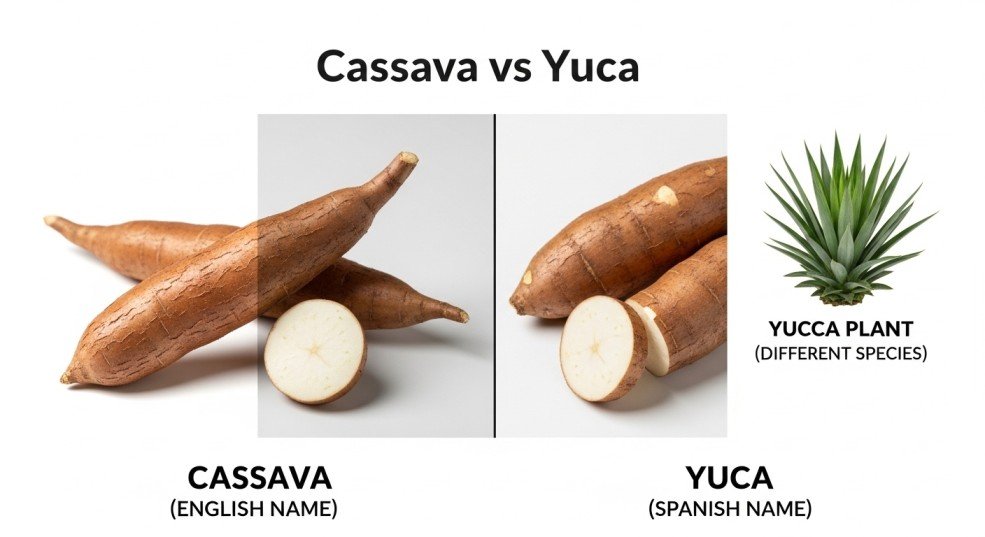
Quick Ans: The main difference between cassava vs yuca is actually a matter of naming, not two separate foods. Cassava and yuca refer to the same root vegetable, while “yucca” (with two c’s) is a completely different plant. Understanding this distinction helps avoid confusion when cooking or shopping.
Many people search for cassava vs yuca because the names sound similar but seem to refer to different foods. This confusion becomes even bigger when the word “yucca” appears, which is not edible in the same way.
In reality, cassava and yuca are the same root vegetable. However, the name changes depending on region and language. For example, English speakers often say cassava, while Spanish speakers use the word yuca.
At the same time, yucca is a decorative desert plant and should not be confused with cassava or yuca. Because of this spelling difference, many beginners make mistakes when buying or cooking.
Understanding the difference between cassava vs yuca is important for cooking, nutrition, and safety. This root vegetable is widely used across Africa, Latin America, and Asia. It is also a staple food for millions of people.
In this guide, you will learn clear definitions, uses, benefits, mistakes to avoid, and practical examples. By the end, you will understand exactly what cassava vs yuca means.
Quick Answer: Cassava vs Yuca
To simplify cassava vs yuca, look at this comparison:
| Term | Meaning |
|---|---|
| Cassava | English name for the root vegetable |
| Yuca | Spanish name for the same root |
| Yucca | Different ornamental plant |
In short, cassava and yuca are the same food. However, yucca is a different plant entirely.
What Is Cassava?
Cassava is a starchy root vegetable grown in tropical regions. It is a major food source in many parts of the world.
This root is rich in carbohydrates and provides energy for millions of people daily.
Key Characteristics
Cassava has several defining features:
- Brown, rough outer skin
- White or yellow interior
- Mild flavor
- High starch content
Because of its neutral taste, cassava works well in many recipes.
Common Uses
Cassava is used in different forms:
- Boiled root
- Fried chips
- Cassava flour
- Tapioca pearls
- Bread and flatbreads
In many cultures, cassava replaces potatoes or rice.
Where Cassava Is Grown
Cassava grows best in warm climates. It is widely cultivated in:
- Africa
- South America
- Southeast Asia
As a result, it plays a key role in global food systems.
What Is Yuca?
Yuca is simply the Spanish name for cassava. The root, taste, and uses remain exactly the same.
The term “yuca” is commonly used in:
- Latin America
- Caribbean countries
- Spanish speaking communities
Why the Name Changes
Language differences explain the variation. English uses “cassava,” while Spanish uses “yuca.”
For example:
- In the United States, grocery stores may label it as cassava.
- In Latin markets, the same root appears as yuca.
Despite the name difference, the product is identical.
Important Note: Yucca vs Cassava
A major source of confusion in cassava vs yuca is the word “yucca.”
Yucca (with two c’s) is a different plant entirely.
| Feature | Cassava / Yuca | Yucca |
|---|---|---|
| Type | Root vegetable | Ornamental plant |
| Edible | Yes (when prepared correctly) | Not commonly eaten |
| Appearance | Thick root | Spiky leaves |
| Usage | Cooking | Landscaping |
Therefore, always check spelling carefully when buying or researching.
Key Differences Between Cassava vs Yuca
Naming
The most important point is naming. Cassava and yuca are the same root vegetable with different names.
Language Usage
English speaking regions use “cassava.” Spanish speaking regions use “yuca.”
Market Labeling
Some stores label it differently depending on the audience. As a result, you may see both names for the same product.
Cultural Context
Different cultures use the same root in unique ways. However, the ingredient itself remains unchanged.
Advantages and Disadvantages
Cassava / Yuca Advantages
- Rich in carbohydrates
- Naturally gluten free
- Versatile in cooking
- Widely available globally
Cassava / Yuca Disadvantages
- Must be cooked properly
- Raw cassava contains natural toxins
- Lower protein content
- Can be high in calories
Because of these factors, proper preparation is essential.
Nutritional Overview
Here is a general nutritional comparison for cassava:
| Nutrient | Amount (per 100g approx.) |
|---|---|
| Calories | 160 |
| Carbohydrates | High |
| Protein | Low |
| Fiber | Moderate |
| Fat | Very low |
Cassava provides energy but should be balanced with other nutrients.
Real World Examples
Grocery Shopping
You visit a supermarket and see “cassava” in one section and “yuca” in another. Both refer to the same root vegetable.
Cooking at Home
A recipe may call for yuca fries. Another recipe may use cassava flour. In both cases, the base ingredient is the same.
Restaurant Menus
Latin American restaurants often use the word yuca. Meanwhile, international menus may use cassava.
These examples show how naming varies by context.
Regional and Global Usage
Africa
Cassava is a staple food in many African countries. It is used to make dishes like fufu and gari.
Latin America
The term yuca is widely used. It appears in fried dishes, soups, and side dishes.
Asia
Cassava is used for snacks, desserts, and tapioca products.
Because of its adaptability, cassava is important worldwide.
Related Concepts and Comparisons
Cassava vs Potato
Cassava is starchier and slightly sweeter than potatoes. It also requires proper cooking before eating.
Cassava vs Sweet Potato
Sweet potatoes are naturally sweeter and softer. Cassava has a more neutral flavor and firmer texture.
Cassava vs Tapioca
Tapioca is a processed product made from cassava starch. It is often used in desserts and drinks.
Common Mistakes About Cassava vs Yuca
Confusing Cassava With Yucca
This is the most common mistake. Yucca is not the same as cassava.
Eating Raw Cassava
Raw cassava contains natural toxins. Always cook it before eating.
Assuming They Are Different Foods
Cassava and yuca are the same. The difference is only in naming.
Improper Storage
Cassava spoils quickly. Therefore, store it properly or use it soon after purchase.
Beginner to Advanced Cooking Tips
Beginner Level
Peel cassava carefully and boil it until soft. Start with simple recipes like boiled cassava.
Intermediate Level
Try frying cassava for crispy snacks. You can also make cassava flour recipes.
Advanced Level
Experiment with traditional dishes like fufu or tapioca desserts.
With practice, cassava becomes a versatile ingredient in your kitchen.
Step By Step Cooking Scenario
Imagine you have fresh cassava.
- Peel the thick outer skin
- Cut into pieces
- Remove the inner core
- Boil until tender
- Use in recipes or fry
These steps apply whether you call it cassava or yuca.
Exercises With Answers
Exercise 1
Are cassava and yuca different foods?
Answer: No.
Exercise 2
What is the main difference between cassava vs yuca?
Answer: The name.
Exercise 3
Is yucca the same as cassava?
Answer: No.
Exercise 4
Should cassava be eaten raw?
Answer: No.
Exercise 5
Which language commonly uses the word yuca?
Answer: Spanish.
When Should You Use Cassava vs Yuca?
Use the word cassava when:
- Writing in English
- Reading international recipes
Use the word yuca when:
- Following Latin American recipes
- Shopping in Spanish speaking markets
The choice depends on context, not the ingredient.
FAQs About Cassava vs Yuca
What is the difference between cassava vs yuca?
There is no real difference. Cassava and yuca are the same root vegetable with different names.
Is cassava the same as yuca?
Yes. In the cassava vs yuca comparison, both terms refer to the same plant.
What is yucca and how is it different?
Yucca is a different plant used for decoration, not the same as cassava.
Can you eat cassava raw?
No. Cassava must be cooked properly to remove natural toxins.
Why do some recipes say yuca instead of cassava?
Recipes from Spanish speaking regions use the term yuca.
Is cassava healthy?
Cassava provides energy but should be eaten as part of a balanced diet.
What does cassava taste like?
It has a mild, slightly nutty flavor.
Can cassava replace potatoes?
Yes. Cassava can be boiled, fried, or mashed like potatoes.
Is tapioca made from cassava?
Yes. Tapioca comes from cassava starch.
Where can I buy cassava or yuca?
It is available in many supermarkets and international grocery stores.
Conclusion
The comparison of cassava vs yuca is simpler than it seems. Both names refer to the same root vegetable used widely across the world. The only real difference comes from language and regional usage.
Confusion often occurs because of the similar spelling of “yucca,” which is a completely different plant. Therefore, careful attention to spelling is essential when shopping or cooking.
Cassava is a versatile and energy rich ingredient. It works well in many dishes, from boiled roots to fried snacks and desserts. However, proper preparation is important because raw cassava contains natural toxins.
Choosing between the terms cassava and yuca depends on context. English speakers prefer cassava, while Spanish speakers use yuca.
By understanding cassava vs yuca clearly, you can avoid mistakes, cook safely, and explore a wide range of global recipes with confidence.
Discover More:-
- Tamal vs Tamale: Meaning, Grammar Differences, and Usage Guide
- Springtail vs Flea: Differences, Identification, and Control Guide

Robert Mitchell is a U.S.-based writer at Gramtivo.Com who focuses on grammar, writing improvement, and language-related content. He holds a degree in English and Linguistics from a U.S. university. His work aims to help readers enhance their writing skills with clear and practical guidance.